Controlled Humidity Rooms: Why the Process Requirement Should Define the Facility.
A controlled humidity room should start with the process, not the HVAC system. The first question is what the room is protecting and from what level of moisture exposure. That answer should determine the dew point or relative humidity requirement, enclosure, air treatment, pressure regime, monitoring strategy and operating procedures.
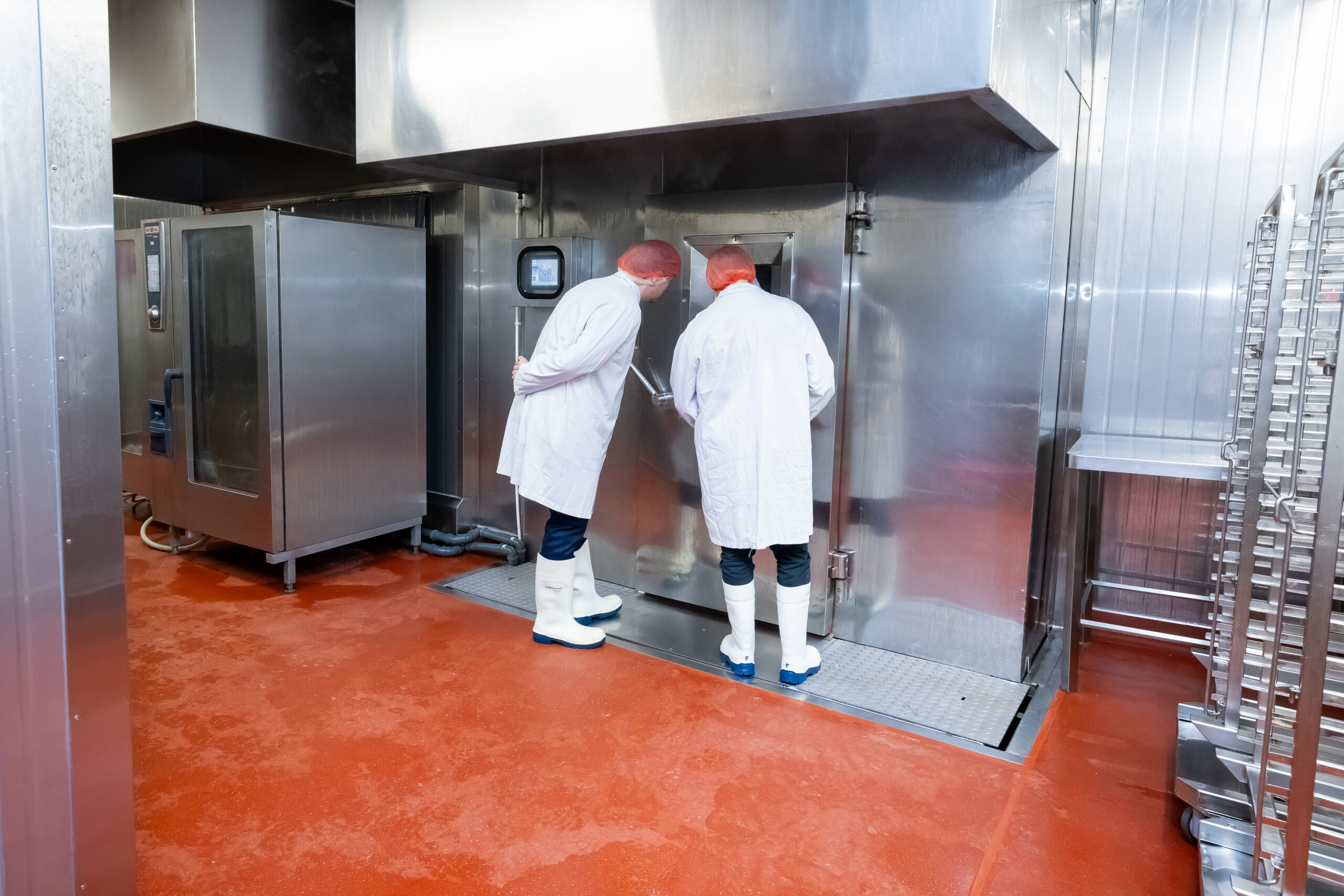
This is particularly important in pharmaceutical manufacture. EU GMP Annex 1 states that temperature and relative humidity should be controlled within ranges that:
“align with product/processing/personnel requirements and support maintenance of defined cleanliness standards.”
The wording matters. GMP does not provide one universal humidity setpoint. The manufacturer must establish conditions appropriate to the product and process, then demonstrate that the facility can maintain them.
The same principle applies in advanced manufacturing. Lithium-ion battery production is a clear example because moisture can react with electrolyte materials and affect cell performance. At the UK Battery Industrialisation Centre in Coventry, different stages of cell manufacture operate under different environmental conditions. Cell assembly is carried out in ISO 7 clean and dry conditions at around -40°C dew point, while electrolyte filling requires conditions around -50°C dew point.
That is a useful lesson for engineering teams. The whole manufacturing area does not necessarily need the most demanding condition. Different processes can justify different environmental zones. This is also why dew point is often more useful than relative humidity in very dry environments. Relative humidity changes with temperature. Dew point provides a more direct indication of the moisture content of the air and gives designers a clearer basis for low-humidity calculations. The dehumidifier itself is only part of the system.
Moisture enters through doors, people, materials, process extraction, outside air, service penetrations and leaks in the enclosure. Wall and ceiling panels, floor junctions, doors, airlocks, transfer hatches and pressure relationships all affect performance. A specification stating only “achieve -40°C dew point” therefore leaves important questions unanswered. Engineers also need to understand occupancy, door-opening frequency, material movements, outside-air volumes, extraction, room temperature, recovery time and operating pressure.
Recovery time can be particularly important. A room that reaches its specified dew point when empty and undisturbed may still perform poorly during production. The design needs to account for personnel entry, material transfers and process interventions. Where cleanliness is also required, another layer is added. ISO 14644-1 classifies cleanrooms according to airborne particle concentration, while ISO 14644-4 covers the process of taking a cleanroom from requirements through design, construction and start-up.
Humidity control and cleanliness should therefore be treated as separate but coordinated requirements. A low-dew-point room does not automatically achieve a cleanroom classification, and a classified cleanroom does not automatically provide the moisture control required by the process.
Energy use also supports a more targeted approach. UKBIC identifies dry rooms among the major energy-consuming areas in lithium-ion battery cell manufacturing. Conditioning unnecessary space to an unnecessarily low dew point can therefore create a significant operational burden. Good zoning can reduce that load. Smaller controlled volumes, appropriate airlocks and well-sealed enclosures can reduce the amount of moisture the system needs to remove.
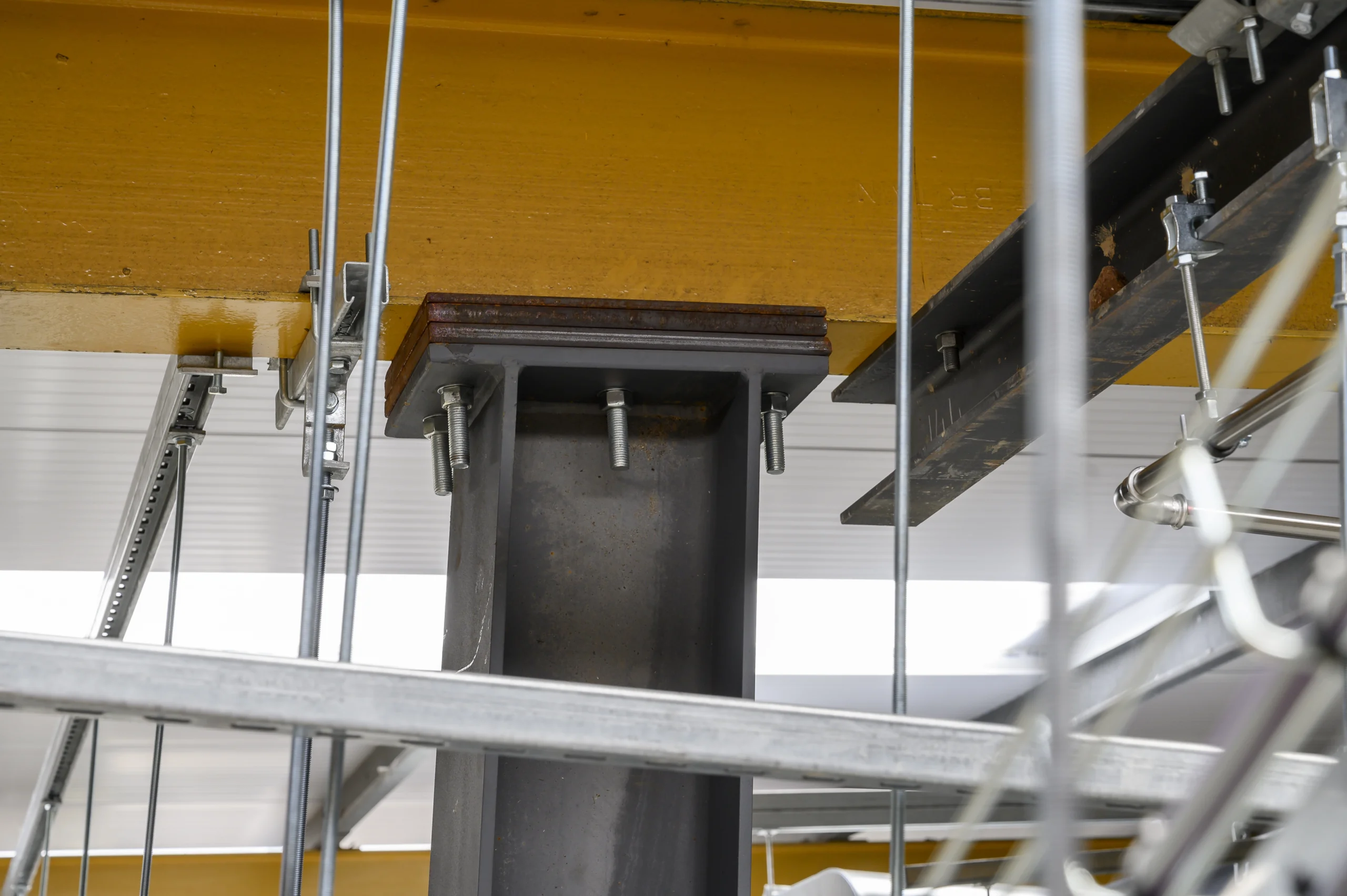
Construction quality then becomes part of process performance. A poorly sealed panel joint, uncontrolled penetration or badly coordinated door can create a moisture load that was absent from the design calculation. This becomes particularly important when controlled environments are installed inside live manufacturing facilities. Construction may need to be coordinated around production, hygiene controls, shutdown windows, isolations and validation activities.
Under the Construction (Design and Management) Regulations 2015, the principal contractor is required to:
“plan, manage and monitor the construction phase and coordinate matters relating to health and safety”.
For controlled-environment projects, effective coordination also protects the technical integrity of the finished room.Commissioning should prove that the room performs under realistic operating conditions. That may include representative occupancy, door cycles, material transfers, extraction loads, alarm testing and recovery following disturbance.
Future changes should also be considered. New equipment can add heat, extraction or penetrations. Increased production can increase door movements and occupancy. A facility designed with accessible services, planned penetrations and appropriate spare capacity is easier to adapt without compromising environmental control.
The strongest controlled humidity projects therefore begin with a process moisture map: what needs protection, at which stage, to what limit and under which operating conditions.
From there, the engineering team can design the room around the manufacturing requirement.
Ambrey Baker provides consultancy, design, construction, refurbishment, reconfiguration, maintenance and repair support for controlled humidity rooms, dry rooms and humidity-controlled cleanrooms in advanced manufacturing and pharmaceutical facilities.
Talk to Ambrey Baker about designing or upgrading a controlled humidity room around the conditions your manufacturing process actually requires.
LIFECYCLE SUPPORT
Leading Specialists in Industrial Facilities
From early-stage consultancy & design, to Hard FM, repair, refurbishment, reconfiguration, capital works & decommissioning. We support essential facilities that need to remain safe, compliant & operational throughout their working life