When the Roof Becomes a Business Risk: How to Know When Repairs Have Run Their Course
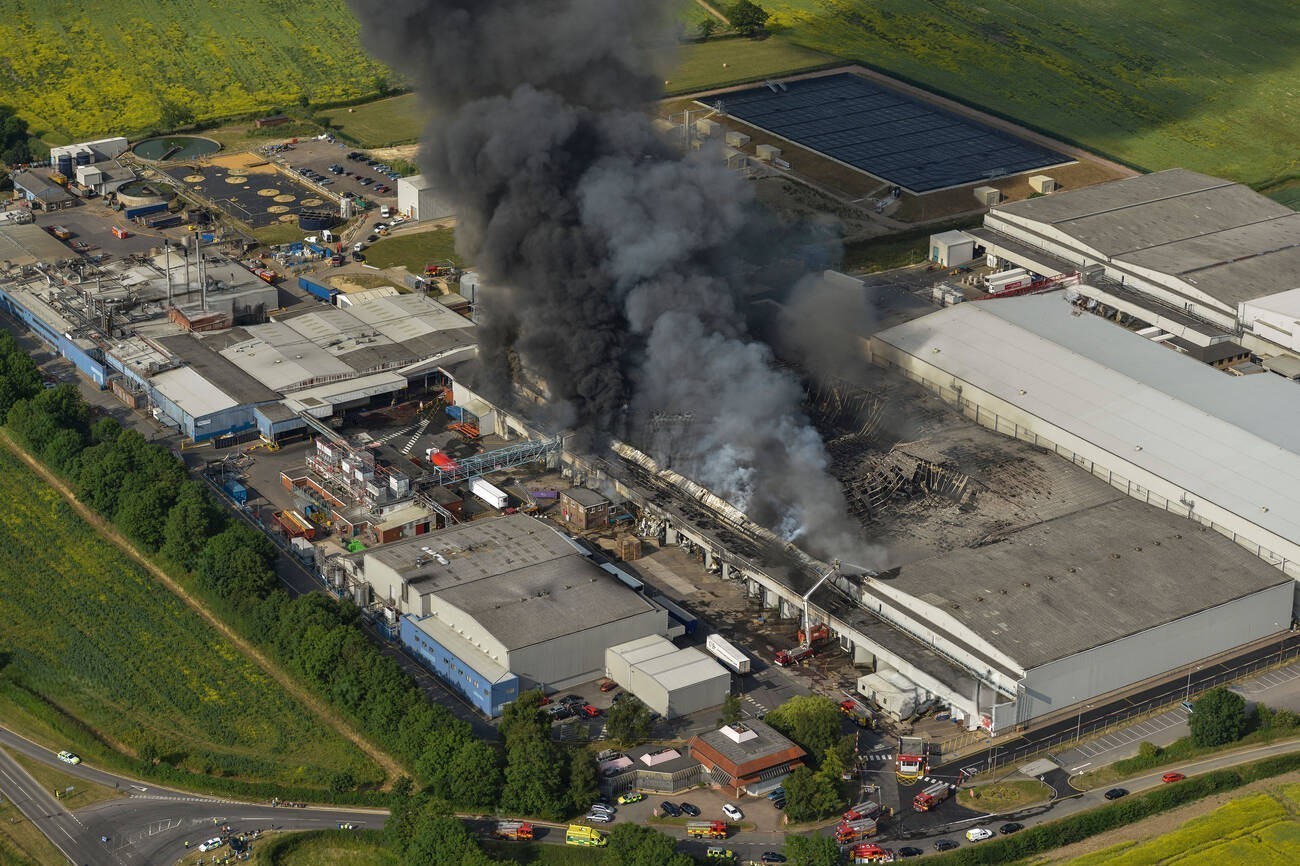
Do your staff know where to place the buckets when it starts to rain? It’s a familiar issue across the aging building stock in the UK. Industrial roof cladding is usually judged too late. A leak appears over stock, a rooflight starts to fail, a gutter overflows, or a production area is disrupted by water ingress. By that point, the conversation has typically already moved beyond maintenance.
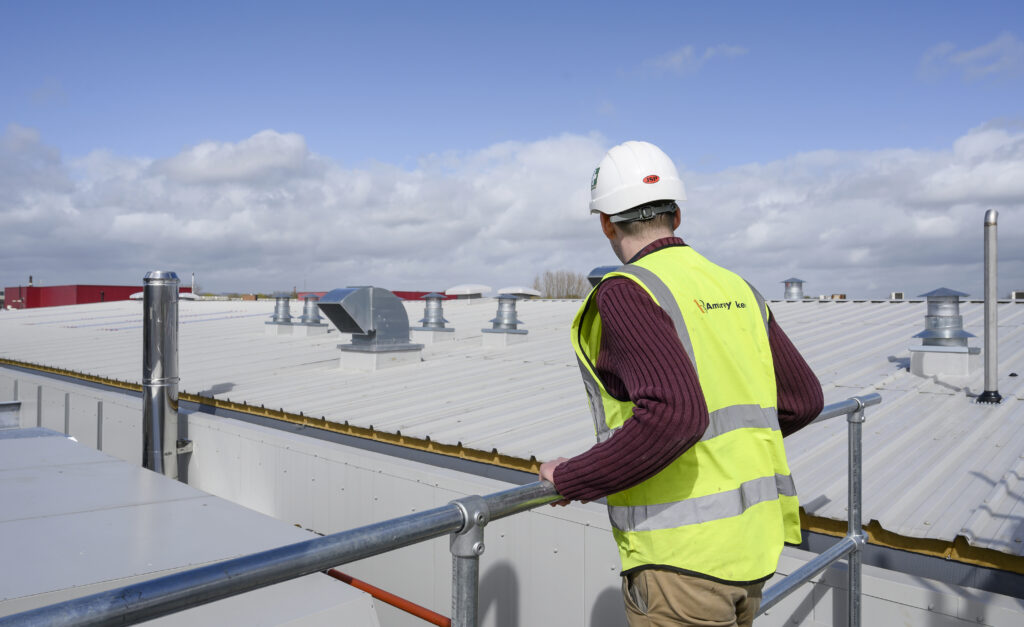
The question becomes whether the roof is still protecting the building, the operation and the people working inside it.
For Ambrey Baker, that is the real threshold. Industrial roof cladding should be replaced when the existing system can no longer provide reliable weather protection, safe access, acceptable building performance and proportionate maintenance value. Age matters, although it is rarely the deciding factor. The evidence sits in the sheets, coatings, fixings, laps, rooflights, gutters, insulation, internal staining and repair history.
A single leak can be a local defect. It may come from a failed seal, damaged rooflight, blocked outlet, loose fixing or localised impact damage. Targeted repair can be the right response where the surrounding roof remains sound. Repeated water ingress across different locations signals a broader problem. Water staining inside the building should be investigated quickly, particularly above production equipment, electrical systems, stored goods, packaging, cold storage or hygiene-controlled areas.
Corrosion is another point where early judgement matters. Light surface rust may be treatable where the sheet remains structurally sound. Widespread corrosion, perforation, edge deterioration and failure around fixings suggest the protective system has degraded. MCRMA guidance, referring to BS 5427, notes that deterioration can be “more pronounced at fixings, laps, edges and abrupt changes in profile”. That is often where minor staining becomes a larger cladding issue.
Fixings and joints deserve the same level of scrutiny as the roof sheets themselves. Industrial roofs move under thermal change. Over time, that movement affects seals, fasteners, laps and penetrations. Missing, loose or corroded fixings can allow sheet movement and water entry. Localised failures may be manageable. Similar failures across large areas point towards refurbishment or replacement.
Rooflights can be overlooked because they are treated as secondary elements. In practice, they are part of the roof’s safety and performance profile. Older rooflights can discolour, crack, become brittle and allow water ingress. They may also create a serious access hazard. HSE states that “all roofs, once fixed, should be treated as fragile” until a competent person confirms otherwise, and identifies rooflights, fibre-cement sheets and corroded metal sheets as likely fragile materials. HSE also records that falls through fragile surfaces, particularly fibre-cement roofs and rooflights, account for 22% of fall from height fatal injuries in construction.
Internal conditions can reveal failures that are less visible from above. Persistent condensation, damp insulation, cold areas and staining beneath the cladding may indicate poor continuity, moisture trapped within the roof build-up or ineffective vapour control. Damp insulation reduces thermal performance and can remain hidden until investigation works begin. MCRMA over-roofing guidance advises that the vapour control layer assessment should consider the amount of insulation already installed and the effectiveness of the current vapour control layer. It also states that, where an existing roof is damaged or leaking, a membrane should be used to prevent condensation entering the building through discontinuities.
The repair record is often the clearest commercial evidence. A roof that needs occasional maintenance may still have service life. A roof covered with patches, temporary seals and repeat local repairs is telling the facilities team something different. Replacement becomes easier to justify when maintenance spend rises, disruption becomes frequent and the consequence of water ingress increases.
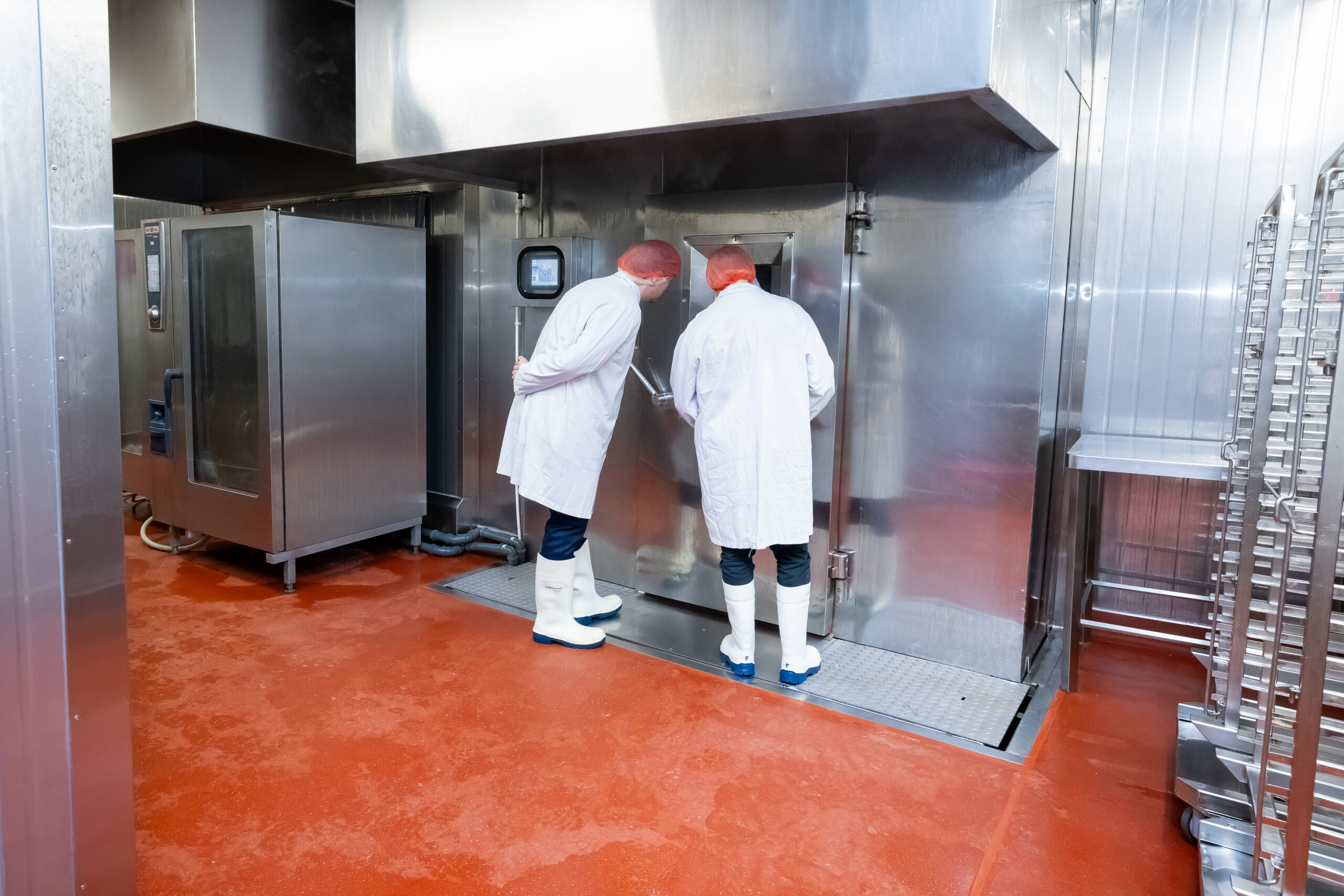
The building’s use must shape the decision. A roof over an unheated storage building carries a different operational risk from one above food production, manufacturing, cold storage, pharmaceutical use or temperature-controlled logistics. A planned change of use can also alter the performance requirements. New plant, vents, ducts, access systems, fall protection, photovoltaic panels or service penetrations should trigger structural and envelope review before works proceed.
Over-cladding can be a practical route where the existing roof and structure are suitable. It can improve weathering and thermal performance while reducing the disruption associated with full strip-off. Its suitability depends on the strength and condition of the existing roof, moisture risk, purlins, fixings, drainage, insulation, rooflights, gutters and penetrations. MCRMA guidance says a competent person, such as a structural engineer, should confirm that the existing structure can accommodate the weight of an over-roof. Calculations should include wind loadings, additional construction weight, insulation value, rainfall rate, gutter size and outlet distribution.
The strongest replacement decisions come from a documented roof condition survey. That survey should record the condition of sheets, coatings, fixings, laps, rooflights, gutters, outlets, penetrations, flashings, insulation and internal moisture signs. It should also consider access safety, structural concerns, asbestos information, repair history and future building use. The output should separate local defects from system-wide failure and compare repair, over-cladding and full replacement on risk, disruption, compliance and whole-life value.
Ambrey Baker’s role is to bring that judgement together. Industrial roofing decisions sit across building fabric, operational continuity, access safety, regulatory compliance, drainage, thermal performance and live-site delivery. Treating those issues separately creates gaps. Treating them as one building-envelope strategy gives clients a clearer route to the right decision.
Industrial roof cladding should be replaced when deterioration is widespread, water ingress is recurring, safety risks are increasing, insulation performance has been compromised or continuing repairs no longer provide a dependable result. Planned replacement gives the building owner control over programme, access, production interfaces and specification. Emergency replacement gives the roof control over the business.
LIFECYCLE SUPPORT
Leading Specialists in Industrial Facilities
From early-stage consultancy & design, to Hard FM, repair, refurbishment, reconfiguration, capital works & decommissioning. We support essential facilities that need to remain safe, compliant & operational throughout their working life